
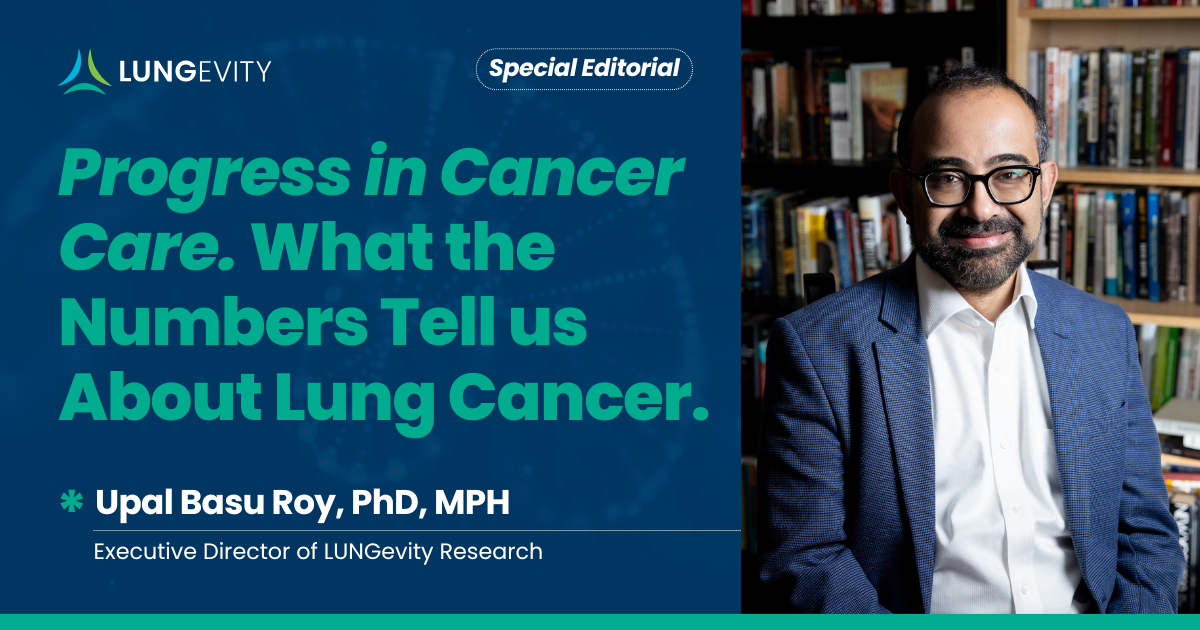
Every January, the American Cancer Society releases a Cancer Facts & Figures report. It provides a clear view of where we stand in addressing cancer. The 2026 report brings both encouraging news and a sobering reminder that our work is far from over.
The Big Picture Shows Real Progress
Let’s start with the good news. We have made significant strides in cancer care over the past three decades. Since 1991, the cancer death rate has dropped by 34%. This translates to approximately 4.8 million lives saved. This number is much more than a statistic. It means millions of families didn’t lose a loved one to cancer. It means millions of survivors celebrated birthdays they might not have reached in prior decades.
These improvements are widespread with the combined 5-year survival rate for all cancers reaching 70%. That's a striking improvement from 49% in the mid-1970s.
Lung Cancer: A Poster Child of Progress
Now let’s focus on lung cancer. Lung cancer remains the leading cause of cancer death around the world. In 2026, the United States will see an estimated 229,410 new diagnoses and 124,990 deaths, which averages to roughly 350 deaths per day.
But here's the remarkable part: Lung cancer mortality rates have plummeted 62% in men since 1990. They have dropped 38% in women since 2002. Over the past decade alone, death rates have decreased by 4.7% per year in men. For women, the rate has decreased by 3.5% per year. This is the fastest decline of any major cancer.
A 62% decline in lung cancer mortality in men shows what’s possible when research leads the way. LUNGevity is committed to pushing that progress even further.
-Upal Basu Roy, PhD, MPH, Executive Director of LUNGevity Research
What's driving this dramatic turnaround? Several factors are working together. We are seeing a decrease in tobacco exposure. Lung cancer screening with low-dose CT scans is finding cancer earlier, when it is most treatable. And revolutionary treatments, such as immunotherapies and targeted therapies, have more than doubled the 5-year survival rate.
Today, 28% of people diagnosed with lung cancer are alive after five years of receiving a diagnosis, compared to 15% during 1995-1997. When people are diagnosed at the earliest, localized stages of disease, that survival rate jumps to an impressive 65%. These numbers demonstrate real and meaningful progress in the field.
But We Still Have a Long Way to Go
Even with these gains, major challenges remain. Only 28% of lung cancers are diagnosed at an early stage, when outcomes are best. Deep and persistent disparities also shape who benefits from progress. Cancer death rates are 14% higher in Black men compared to White men, and some communities face significantly greater lung cancer risks because of limited access to high-quality screening and treatment. These inequities are preventable, and they highlight areas where continued attention is needed.
The Critical Role of Advocacy Organizations
Government and health systems cannot tackle these challenges alone. Organizations, such as LUNGevity Foundation, play a critical role in addressing gaps in lung cancer research and patient care by:
- Investing in innovative research to develop breakthrough treatments and early detection tools.
- Providing patient navigation services and helping people living with lung cancer overcome barriers to access clinical trials and cutting-edge therapies.
- Championing policies ensuring insurance coverage for lung cancer screening and biomarker testing.
- Advocating for mitigation of risk factors, such as radon reduction.
Perhaps most importantly, we work to eliminate the stigma surrounding lung cancer. We ensure that anyone affected by lung cancer receives compassionate, comprehensive care, regardless of their tobacco history.
Looking Forward
For lung cancer, continued progress requires our support in key areas:
- Sustained investment in tobacco control and expanded protections across all forms of tobacco.
- Expanded access to lung cancer screening for high-risk individuals.
- A redefinition of lung cancer risk that moves towards personalized early detection, using models that incorporate environmental factors (e.g., radon), occupational exposure (e.g. arsenic), and family history of lung cancer.
- Ongoing research to advance early diagnosis and treatment to improve both quantity and quality of life.
We have come remarkably far. We saved millions of lives. With organizations like LUNGevity driving research, supporting patients, and uniting stakeholders across healthcare and industry, there is real hope on the horizon. Together, we can build a future where no one loses their life to lung cancer.