Navigating Hope: How Comprehensive Biomarker Testing is Guiding Lung Cancer Care
Join us for a discussion on lung cancer biomarkers to learn what biomarker testing is, why it’s important, and how it can be used to optimize your treatment plans. We are thrilled to welcome our panelists: Balazs Halmos, MD, a thoracic medical oncologist from Montefiore Medical Center in New York; Elizabeth Ravera, a patient navigator at Montefiore; and a patient living with lung cancer who tested positive for the ALK biomarker. The panel is moderated by LUNGevity's Amy Moore, PhD, VP of Global Engagement and Patient Partnerships. This webinar is co-sponsored by LUNGevity Foundation and Amgen.

The Basics of Neuroendocrine Tumors (NETs)

Our lung tissue is made of different kinds of cells, including neuroendocrine cells. If these cells develop changes in their genome, they can begin to grow out of control and become tumors. Large cell lung cancer (which is the rarest form of non-small cell lung cancer) and small cell lung cancer (also referred to as SCLC) are both neuroendocrine tumors (NETs), derived from neuroendocrine cells in the lungs. LUNGevity spoke with Lauren Byers, MD, professor in the Department of Thoracic/Head and Neck Medical Oncology at the University of Texas MD Anderson Cancer Center and a member of LUNGevity

Finding Clinical Trials for Lung Cancer: Tools and Resources

Clinical trials are an important option for patients because the newest treatment approaches, not available otherwise, are being tested in them. Clinical trial research leads to more advancements and potential treatment options, and the therapies used today were once tested in clinical trials. Continued progress is only possible if patients with lung cancer volunteer to participate in the clinical trial process. There are many ongoing clinical trials testing new lung cancer treatments, including targeted therapies, chemotherapy, radiation therapy, and immunotherapy, alone and in combination

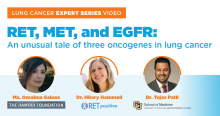
RET, MET, and EGFR: An unusual tale of three oncogenes in lung cancer

LUNGevity's Upal Basu Roy, PhD, MPH, Executive Director, Research, discusses innovative research into RET+ NSCLC with patient advocates and the scientist conducting the studies. Panelists include Omaima Salous (diagnosed with RET+ NSCLC and co-founder of The Hamoui Foundation), Dr. Hilary Hammell (diagnosed with RET+ NSCLC and co-chair of RETpositive), and Dr. Tejas Patil (Assistant Professor, University of Colorado). The discussion focuses on Dr. Patil’s RET+ NSCLC research project and why it matters to patients. This project is supported by a Hamoui Foundation/LUNGevity Foundation award for

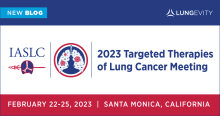
Real-World Drug Development at the Targeted Therapies of Lung Cancer Meeting

The development of new treatments for any disease relies on the collaborative efforts of many different stakeholders, such as scientists, clinicians, patient advocacy groups, regulators, and pharmaceutical and biotech companies. During scientific conferences that happen throughout the year, stakeholders cobble together opportunities to discuss the current state of treatments and strategize ways to bring emerging lifesaving treatments to patients. Each year, there is one key conference dedicated to bringing these stakeholders together with the sole goal of discussing the development of

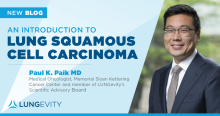
An Introduction to Squamous Cell Lung Cancer

Lung squamous cell carcinoma (LSCC), also called squamous cell lung cancer, is one of the major subtypes of non-small cell lung cancer (NSCLC). Fifty years ago, LSCC was the most common lung cancer diagnosis. LSCC was considered the classic smoker’s lung cancer, as most patients with LSCC had a history of smoking cigarettes. Today, the incidence of LSCC depends on where you live. In areas with decreasing smoking rates, we’ve also seen a reduction in the number of LSCC diagnoses. Overall, while lung adenocarcinoma is now the most common type of NSCLC in the US, approximately 15-30% of lung

Ask Your Oncologist the Right Questions

Communication is critical to a positive doctor-patient relationship. Knowing the right questions to ask helps ensure you leave your appointments with the information and answers you need. Being prepared may also lessen anxiety and help provide a sense of control. Meeting with your oncologist, especially when first diagnosed or deciding on a treatment plan, are times when being prepared with questions is necessary. LUNGevity has downloadable lists of questions that you can bring to appointments to make gathering information and taking notes easier. Below are sample questions for different

Innovative Research Brings Potential New Class of Drugs for Patients with ALK-EML4 Fusion

Targeted therapies, or treatments directed towards specific biomarkers in tumor cells, have been effective in treating many patients with advanced-stage non-small cell lung cancer (NSCLC). Tumors that have the ALK protein fused with another cancer-driving protein, such as the EML4 protein, are often referred to as ALK-positive tumors. Approximately 5% of advanced-stage adenocarcinoma, a type of NSCLC, will test positive for an ALK-fusion biomarker. Treating patients with ALK-positive lung cancer with a class of drugs called tyrosine kinase inhibitors (TKIs) has been an effective approach

Treatment Options for Small Cell Lung Cancer

This webinar offers a detailed overview of SCLC treatment, including the important elements of a treatment plan. It features Narjust Florez, MD, medical oncologist at Dana-Farber Cancer Institute and associate professor at Harvard. The webinar is moderated by Amy Moore, PhD, VP of Global Engagement and Patient Partnerships at LUNGevity Foundation. This activity is supported by an educational grant from Jazz Pharmaceuticals, Inc.